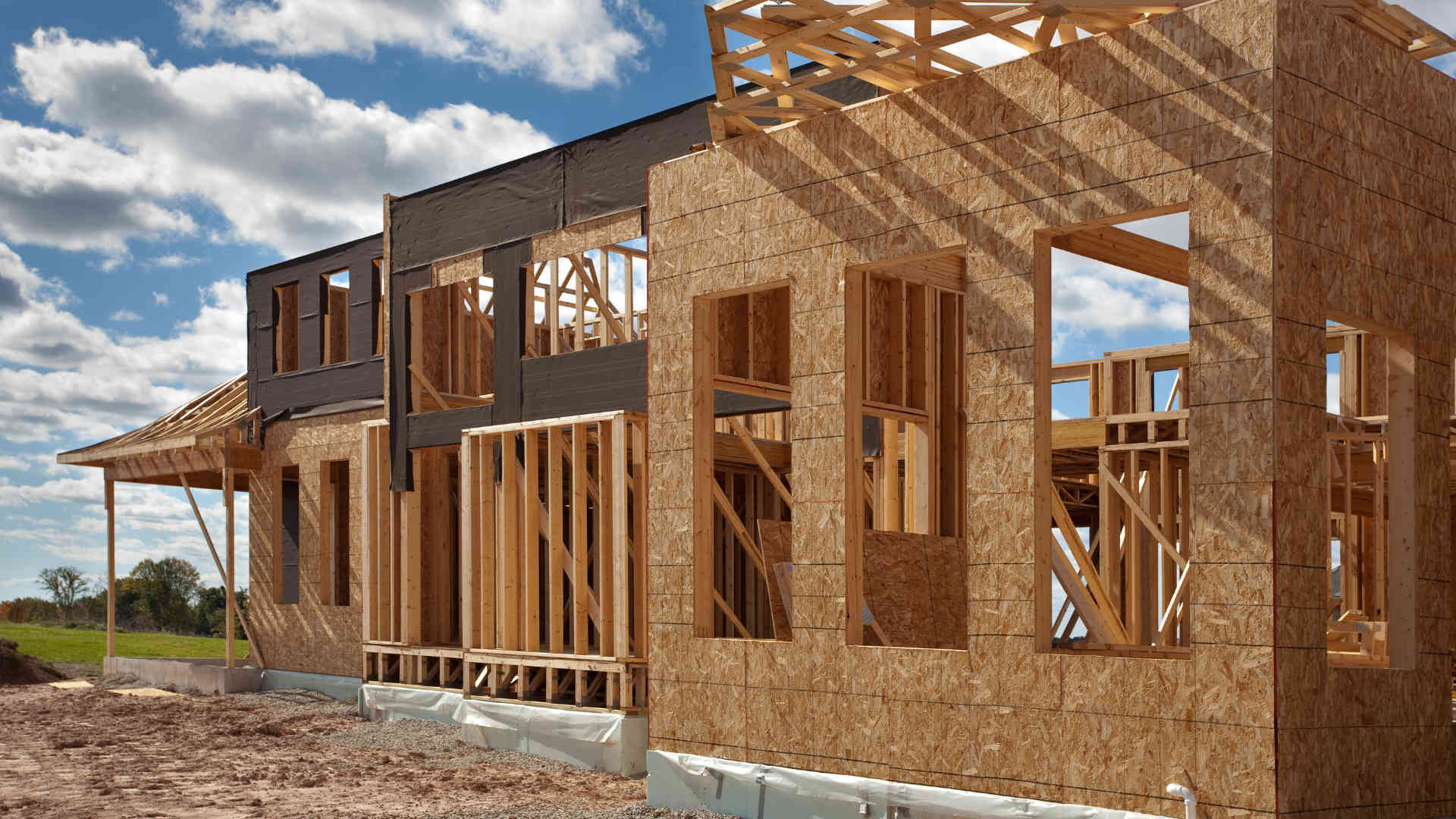
Recovery is the process of rebuilding and restoring after a disaster. It goes beyond repairing physical damage, focusing also on emotional, social, and economic healing. This phase helps communities return to normal, or even stronger, by repairing infrastructure, supporting survivors, and fostering long-term resilience.
The following programs are available to help you on your road to recovery.
FEMA Public Assistance Program
The Federal Emergency Management Agency (FEMA) Public Assistance grant program provides assistance to State, Tribal, and local governments and certain types of private non-profit organizations to help reimburse costs associated with damage to public infrastructure such as roads and bridges. FEMA funds the program, which Wisconsin Emergency Management administers in the state. In order to be eligible for a Presidential Disaster Declaration, the event must overwhelm the state and local response and recovery efforts, meet countywide damage thresholds ($5.03 per capita) and meet a statewide damage threshold ($2.01 per capita) of $11,846,373.18 using the 2020 US Census. Once approved by the President, FEMA provides 75% reimbursement of eligible documented costs, the State of Wisconsin provides up to 12.5% of eligible documented costs, and the local government’s share of 12.5%. To request a federal disaster declaration, the Governor must request FEMA to come to the impacted county or counties and conduct a damage assessment of damaged public infrastructure such as roads and bridges. A FEMA inspector will determine if the damage is eligible under the federal program. The information gathered from a damage assessment will be provided to the Governor who will then request the President to approve a federal disaster declaration.
Resources
- FEMA Assistance for Governments and Private Non-Profits After a Disaster
- Procurement Disaster Assistance Team Resources when Procuring with Federal Grant Funds
- FEMA Emergency Management Institute
- FEMA Public Assistance Grants Portal System
- WEM Public Assistance Grants Management System (EM Grants Pro)
- Wisconsin Public Assistance Administrative Plan
- Damage Thresholds by County
- Countywide Per Capita Minimum FY2027
Wisconsin Disaster Fund
The Wisconsin Disaster Fund (WDF) is a state-funded reimbursement program that allows local governmental units – namely, counties, cities, townships, villages, and tribal units of government – to recoup costs incurred while responding to and recovering from disaster incidents. The state reimburses 70% of eligible costs after the local governmental unit submits a complete WDF application. The fund does not cover individuals, businesses, the agricultural sector, costs associated with snowstorms, damages covered by insurance, nor does it provide funds for mitigation activities. The fund does reimburse public disaster costs under three categories of work: Category A Debris Clearance, Category B Protective Measures, and Category C Road and Bridge Repair.
How to Apply
County and Tribal Emergency Management Directors submit the following documents:
- Uniform Disaster Situation Report is recommended to be submitted within 72 hours of the start of an incident. This report is submitted through WebEOC to provide basic information regarding the impact to private and public property from an incident.
- A County Notification form is submitted via email, which list the local jurisdictions seeking WDF reimbursement and their estimated recovery costs.
Local Jurisdictions submit the following documentation
By 60 days from the end of the incident period the Local Application and the Damage Assessment is submitted through EM Grants Pro. The final recovery work does not need to be completed by this time frame, but the application must include:
- Cost Estimates or Actual Costs for the Category A, B and C damages
- Damage Assessment on the locations where the costs were incurred. The information must include the category of work, location (preferably GPS), dimensions (length, width, and depth/height), and work necessary to bring the site back to pre-disaster conditions. It is also highly recommended that photos be included of the locations prior to the damage being repaired.
Within 30 days of the application being returned to the jurisdiction, the final supporting documentation should be uploaded into EM Grants Pro. For details on what supporting documentation is required, refer to the WDF Administrative Plan. If additional time is needed to complete the recovery work, a time extension must be submitted through EM Grants Pro within the same time period.
WDF Contact Information
Kelsey Brown
Wisconsin Disaster Fund Coordinator
Phone: 608-242-3259
Email: widisasterfund@widma.gov
Long-Term Recovery
Some individuals, families, and communities that are especially hit hard by a disaster may need more time and specialized assistance to recover and a more formalized structure to support them during recovery. Specialized assistance may be needed to address unique needs that are not satisfied by routine disaster assistance programs. It may also be required for very complex restoration or rebuilding challenges. Long-term community recovery addresses these ongoing needs by taking a holistic, long-term view of critical needs and coordinating the mobilization of resources at the federal, state, and community levels.
If the event overwhelms your jurisdiction’s ability to respond and recover at the local level, your local unit of government (city, village, county, etc.) should declare a “State of Emergency.”
Wisconsin Recovery Task Force
The State of Wisconsin created the Wisconsin Recovery Task Force (WRTF) to coordinate state efforts in recovery regarding mitigation, agriculture, economic, housing, infrastructure and health and social services.
The mission of the WRTF is to assist individuals, businesses and communities recover quickly, safely and with increased resilience to disasters.
The critical focus areas include:
- Securing funding and other resources necessary for recovery
- Establishing principles and policies for redevelopment
- Leading long-term community and regional planning efforts
- Ensuring transparency and accountability in the investment of recovery funds
- Communicating progress
Long-Term Recovery Resources
Contact Information
Sam Liebl
State Recovery Planner and Individual Assistance Officer
Phone: 608-316-5374
Email: Samantha.liebl@widma.gov
Other Disaster Assistance
Businesses and Private Non-Profits
Program to provide low-interest disaster loans to businesses of all sizes, private non-profit organizations, homeowners, and renters. These disaster loans can be used to repair or replace some eligible items damaged or destroyed in a declared disaster.
Agriculture
USDA’s Farm Services Agency provides disaster assistance for natural disaster losses, resulting from drought, flood, fire, tornadoes, and other types of events to assist agricultural producers with disaster recovery.
Their mission is to partner with all the citizens of Wisconsin to grow the economy by promoting quality food, healthy plants and animals, sound use of land and water resources, and a fair marketplace.
UW-Extension provides connection to every county in the State, and will be able to provide county-specific information in event of an agricultural disaster event.
The UW-Extension Local Government Center provides resources to plan for, respond to, and recover from natural disasters.
Drought Disaster Assistance helps provide disaster loans to small, non-farm businesses, small agricultural cooperatives, and some private non-profits affected by drought.
Government and Communities
This program provides funds to assist local governments in addressing emergency housing needs as a result of disasters.
This program provides assistance for housing programs principally benefiting low and moderate income households. Certain rehabilitation, demolition, and acquisition projects may be eligible under this program.
This program provides financial assistance to local governments to repair highways with significant damage due to disaster events.
The UW-Extension Local Government Center provides resources to plan for, respond to, and recover from natural disasters.
This is a forum where organizations share knowledge and resources throughout the disaster cycle to help disaster survivors and their communities.
This a place to learn more about volunteering and assistance opportunities
Contact: Wisconsin Volunteer Organizations Active in Disaster Chair, Keith Lang
Email: klang@lsswis.org
Environmental and Historic Preservation
The most important message we can give is to anticipate environmental and historic preservation issues at the outset of a disaster. The earlier these issues are anticipated, the easier it may be to navigate through the review process. Discuss these issues or questions with Federal Emergency Management Agency (FEMA) and Wisconsin Emergency Management staff as soon as possible. For more information regarding specific environmental or historic concerns:
FEMA can provide technical assistance on environmental and historic preservation regulations and issues.
The DNR works to protect and enhance the environment in Wisconsin, encouraging early planning and consultation. This includes air permitting, air quality, endangered species, recycling/composting, water resources, and environmental impact.
They help determine if historic preservation laws apply to your project.
In certain types of waterway projects, they must be consulted for permitting.
Federal grants are required to minimize threats to endangered species. This site helps perform a Section 7 Consultation online.
The FEMA Flood Map Service Center is the official public source for flood hazard information produced in support of the National Flood Insurance Program.
FEMA Individual Assistance
For the State of Wisconsin to qualify an Individual Assistance Declaration, FEMA inspectors would look to confirm 582 (according to CFR 44) homes major damaged or destroyed. In a wind event, major damage to manufactured homes is described as the residence has been displaced from the foundation, block or piers and other structural components have been damaged. Destroyed is the structure is a total loss; frame is bent, twisted or otherwise compromised; missing the roof covering or the structural ribbing has collapsed for the majority of the roof system. For conventionally built homes, major damage is considered partial failure to structural elements of the roof, walls, or foundation. Destroyed is complete failure of two or more major structural components (walls, foundation, or roof) or only foundation remains. To request a federal disaster declaration, the Governor must request FEMA to come to the impacted county or counties and conduct a damage assessment of damaged homes and businesses. A FEMA inspector will determine if the damage is eligible under the federal program. The information gathered from a damage assessment will be provided to the Governor who will then request the President to approve a federal disaster declaration. In an Individual Assistance Declaration the Individual Assistance program provides assistance to individuals and households, which may include:
- Individual and Household Program – FEMA’s Individuals and Households Program provides financial and/or direct assistance to eligible applicants. Parts of the program include:
- Housing Assistance includes Temporary Housing such as rental assistance.
- Repair provides financial assistance to help homeowners repair or replace disaster damage to their primary residence not covered by insurance. The assistance is intended to repair the home to a safe and sanitary condition.
Other Needs Assistance provides:
- Disaster Supplemental Nutrition Assistance Program (D-SNAP) – Through D-SNAP, USDA Food and Nutrition Service is able to quickly offer short-term food assistance benefits to families suffering in the wake of a disaster.
- Crisis Counseling – Assists individuals and communities in recovering from the effects of natural and human-caused disaster through the provision of community-based outreach and psycho-educational services.
- Disaster Case Management – A time-limited process that involves a partnership between a case manager and a disaster survivor to develop and carry out a Disaster Recovery Plan.
- Disaster Unemployment Assistance – Purpose is to provide unemployment benefits and reemployment services to individuals who have become unemployed as a result of a Presidential disaster declaration and who are not eligible for regular State Unemployment Insurance.
- Disaster Legal Services – This service is provided for survivors of presidential declared major disasters only. Disaster legal advice is limited to cases that will not produce a fee.