For immediate release
Contact: dmawempio@widma.gov
MADISON, Wis. – It began with a phone call on Aug. 10, 2025, around 3 a.m. A woman in Milwaukee called the Department of Military Affairs’ Joint Operations Center, which also partners with Wisconsin Emergency Management as its emergency hotline. She called because she could not get a call through 911 and wanted to help a person trapped in a vehicle amid rising floodwaters. Those working in the Joint Operations Center were able to connect with the Milwaukee County deputy emergency manager to get assistance for the person trapped in the vehicle.
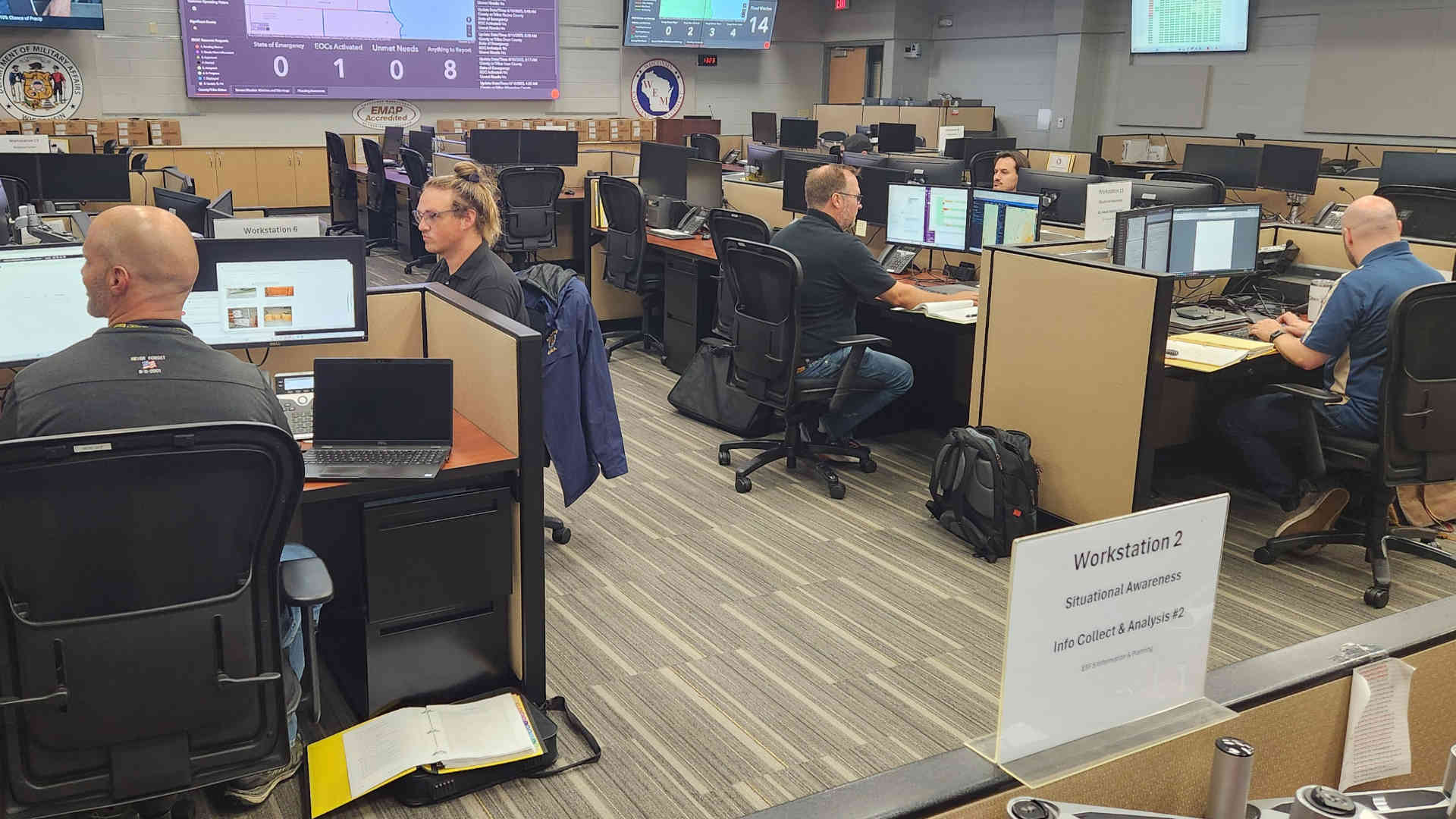
By 11 a.m., the State Emergency Management Operations Center (SEOC) was open. Wisconsin Emergency Management (WEM) staff along with other state and federal agencies monitored conditions, released flood-related safety messaging out to the public, and processed resource requests from impacted counties.
“As soon as I walked into the SEOC, there were two resource requests, and five total on that first day,” said Drew Werner, Supervisor for WEM’s Response Planning and Support Section. “I was providing resource support in the SEOC and with each request that came in, we were beginning to understand the serious nature of the incident and what our fellow Wisconsinites were facing.”
Among the resource requests that came on the first day: swiftwater rescue teams, more than 12,000 sandbags, and the Wisconsin All-Hazards Incident Management Team. One resource request that stood out to Werner was a request for a sandbag machine at a Milwaukee-area hospital. The sandbag machine would help rapidly fill sandbags to keep water from entering their lower levels. During normal circumstances, the requesting agency would pick up the machine from its storage location. However, with local and county workers in Milwaukee busy with immediate response efforts, WEM’s Regional Emergency All-Climate Training Center Director Matt Davies agreed to transport the machine to the hospital himself.
“Prior to Aug. 10, it has been some time since the SEOC was open for a flood response,” said Werner. “While it may have been a while and there were newer WEM staff, the plans we have and the training at WEM allowed us to get the job done in an efficient manner and provide support during this devastating flooding event.”
The SEOC was activated from Aug. 10 – 25 and involved 31 WEM staff supporting operations, along with 11 other agency partners. During that time, they established a common operating picture for responding agencies and coordinated the deployment of resources to assist with local response. Once the flood waters began to recede, the focus shifted to assessing the impacts these storms had on people’s lives and the effects on the community.
“It was critical to get the initial assessments done quickly,” said WEM Administrator Greg Engle. “It can take several weeks to get federal assistance, and we knew the flood survivors had urgent needs for repairs and replacement of damaged belongings. We wanted to get help to them as soon as possible and before colder temperatures set in.”
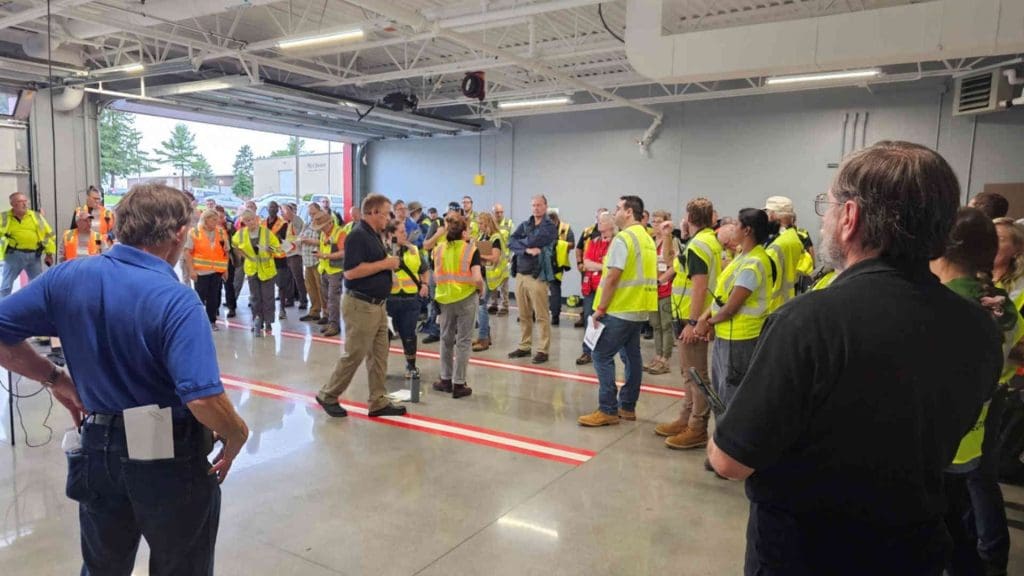
One of WEM’s resources that helped county emergency managers accomplish those initial damage assessments quickly and provide a clear common operational picture was the Wisconsin All-Hazards Incident Management Team (AHIMT). This team is used to help manage and support major incidents and is staffed by qualified personnel from a broad cross section of disciplines, including law enforcement, fire, emergency medical service, public works, emergency management, public health, finance, forestry, and general administration.
“Being involved in this unprecedented flooding incident was a profound and demanding experience,” said Ed Janke, the AHIMT coordinator. “The entire AHIMT has an incredible level of experience, a no-fail attitude, and a high degree of adaptability that makes this team successful at what we do.”
From Aug. 12 -14, 17 members of the AHIMT helped manage 140 personnel per day in Milwaukee County. Assisting with getting the initial damage assessments done as quickly as possible there were 10 WEM staff and assistance from other emergency management personnel from Adams, Dane, Jefferson, Marathon and Rock counties.
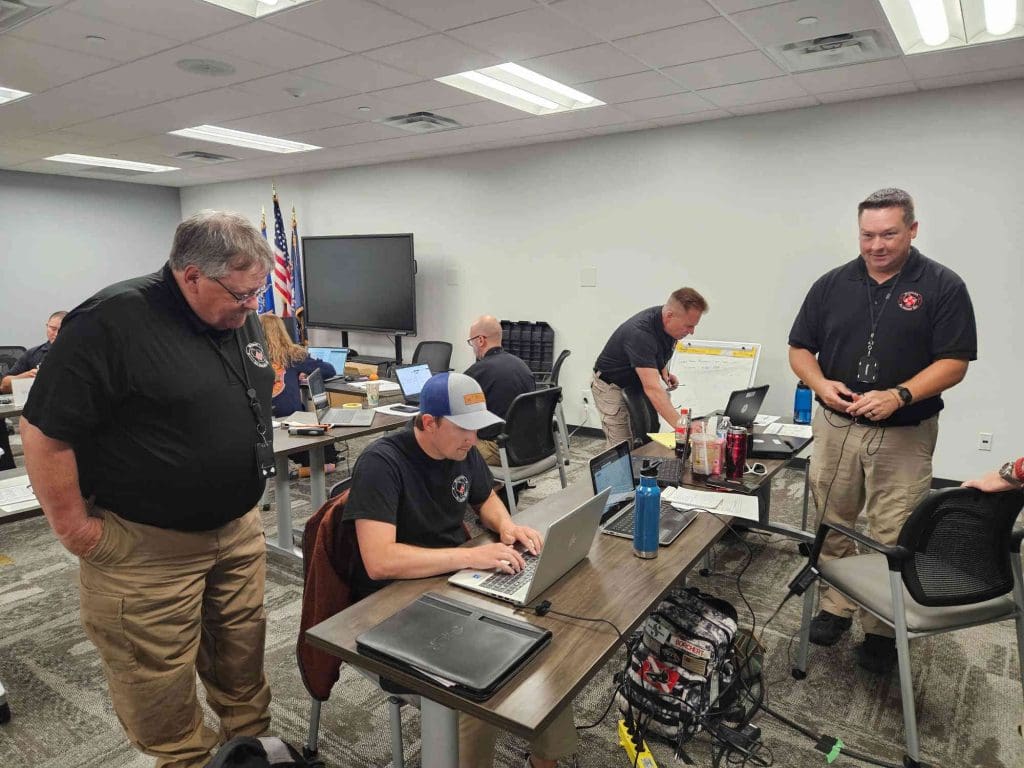
In Milwaukee, Washington and Waukesha counties, teams assessed 4,963 homes and based on the damage to personal and public properties, the Governor made a formal request to FEMA to conduct Joint Preliminary Damage Assessments for Individual Assistance and Public Assistance, to review the information collected to determine if Wisconsin could qualify for a Major Disaster Declaration.
“This information is used to provide a snapshot of the total damage to give the federal government an idea of the scope of damage our state experienced during these August storms and flooding,” said Engle. “The prompt actions by the counties, the AHIMT and Wisconsin Emergency Management ensured this process could begin quickly so people affected by this disaster would get the assistance they needed.”
The Federal Emergency Management Agency (FEMA) was able to begin the Joint Preliminary Damage Assessment (JPDA) for Individual Assistance on Aug. 19. The first stage of review was looking over the data collected from the initial damage assessment conducted by the counties. Then, on Aug. 21, four JPDA teams, consisting of members from FEMA, the U.S. Small Business Administration (SBA), WEM, and counties, conducted field assessments of the homes damaged in Milwaukee, Washington, and Waukesha counties. Among those helping with in-field assessments and logistics behind the scenes was Brian Cockerham, a WEM Region Director for the northwest section, who was one of 18 WEM staff who assisted with the JPDA for Individual Assistance.
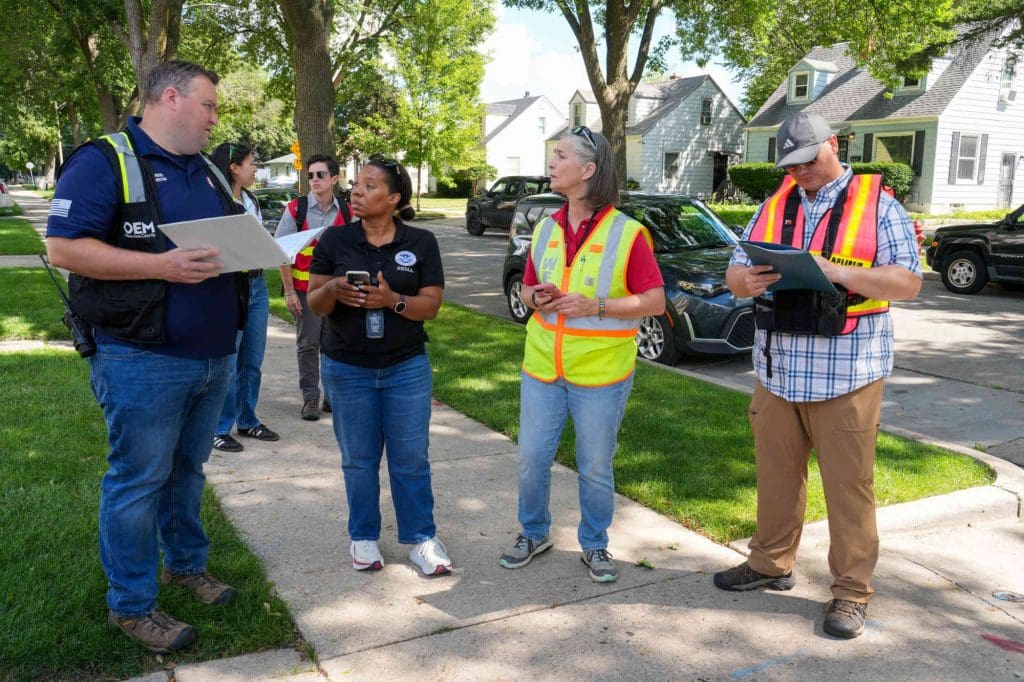
“I was surprised by the amount and widespread damage caused by these storms in southeast Wisconsin,” said Cockerham. “When I was out in the neighborhoods, it was clear this was a major disaster and the people impacted by these storms would need as much assistance as possible to help them recover.”
Once the JPDA for Individual Assistance was completed, FEMA validated damage of 1,500 residential structures that were destroyed or sustained major damage, with damage costs estimated to be more than $33 million. This process was completed two days ahead of schedule. Gov. Tony Evers made a formal Major Disaster Declaration request on Aug. 27, which included Individual Assistance for Milwaukee, Washington and Waukesha counties. It also requested Public Assistance and the Hazard Mitigation Grant Program for Door, Grant, Milwaukee, Ozaukee, Washington, and Waukesha counties.
Meanwhile, as the state awaited the declaration decision, the JPDA for Public Assistance began Sept. 8. While Individual Assistance looked at residential properties, this JPDA looked at costs incurred by the public sector and damage to public infrastructure. This process began with a virtual review followed by in-person reviews of receipts, damage photos, and estimates for six counties. This process involved ten WEM staff with field JPDA teams and behind the scenes logistics.
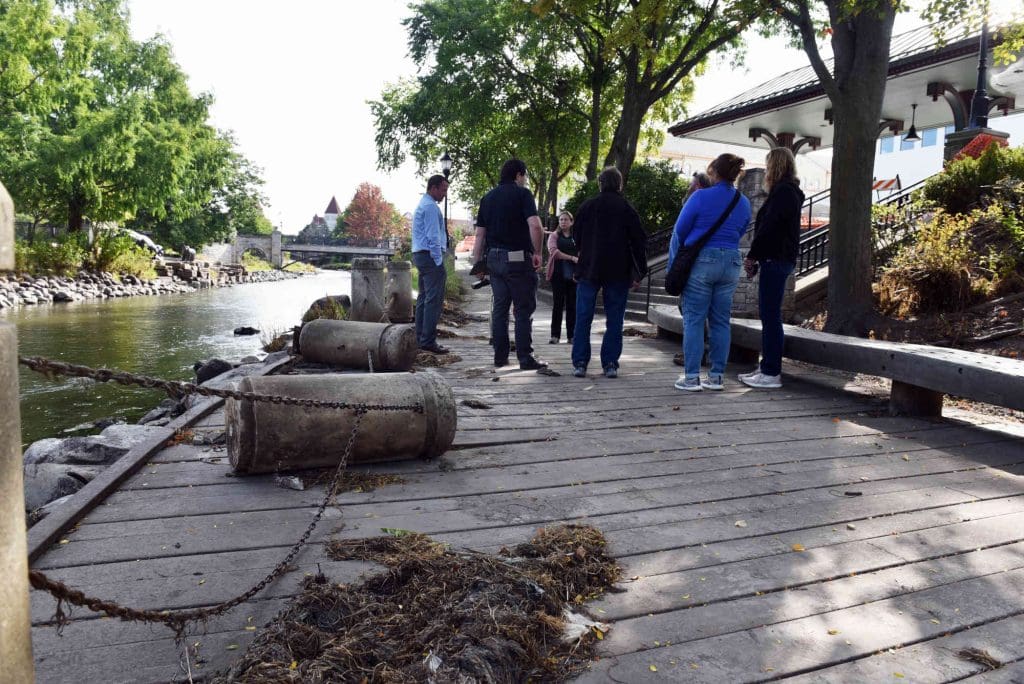
“This was our first time conducting virtual preliminary damage assessments for both Individual and Public Assistance,” said Robby Stoikes, WEM’s Recovery Planning and Support Supervisor. “WEM staff ensured data was collected, organized and submitted in a timely manner to FEMA. I have a great team here that is well versed in Individual Assistance and Public Assistance that can multi-task and implement a declaration decision whenever it occurs.”
The JPDA for Public Assistance was completed on Sept. 17 and validated more than $26.5 million in damage costs in the six affected counties. At the same time as the JPDA for Public Assistance, the state was notified Sept. 11, its federal declaration request was partially granted, with the Individual Assistance program approved for Milwaukee, Washington, and Waukesha counties.
“Once we got the notice that Individual Assistance was granted, homeowners and renters had 60 days to apply for FEMA assistance,” said Engle. “Our priority was getting information out as widely as possible and rapidly standing up the operation to ensure everyone could access the program.”
Individual Assistance Begins
Leading the state’s Individual Assistance (IA) implementation was Sam Liebl, WEM recovery planner and state IA officer. Leibl was leading the logistical planning for the disaster recovery and business recovery centers. This included coordinating with the disaster impacted counties, FEMA and SBA. She had to coordinate center operations, setup, resources available from the counties, state, and municipalities, and disaster survivor assistance program.
“It was difficult at first. On the first day, I was in a conference room with more than a dozen FEMA staff learning who I was working with as well as a lot of information being thrown at me,” said Liebl. “We came together though to figure out how to accomplish everything that needed to be done to get help to the people that needed it.”
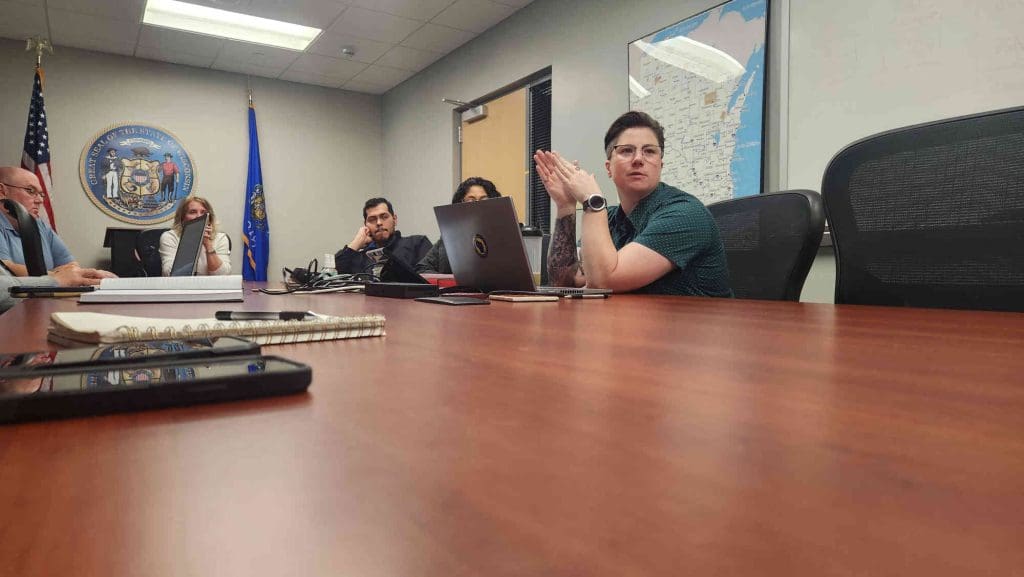
During the 60-day window in which disaster survivors were able to apply for FEMA assistance, Liebl hosted regular sync meetings between federal, state, and county emergency management agencies to stay updated on operations.
During that time, additional WEM staff helped schedule disaster recovery center state staff to provide additional guidance to disaster survivors who may need help. In total, 35 WEM staff worked 197 shifts at seven disaster recovery centers in Milwaukee, Washington and Waukesha counties.
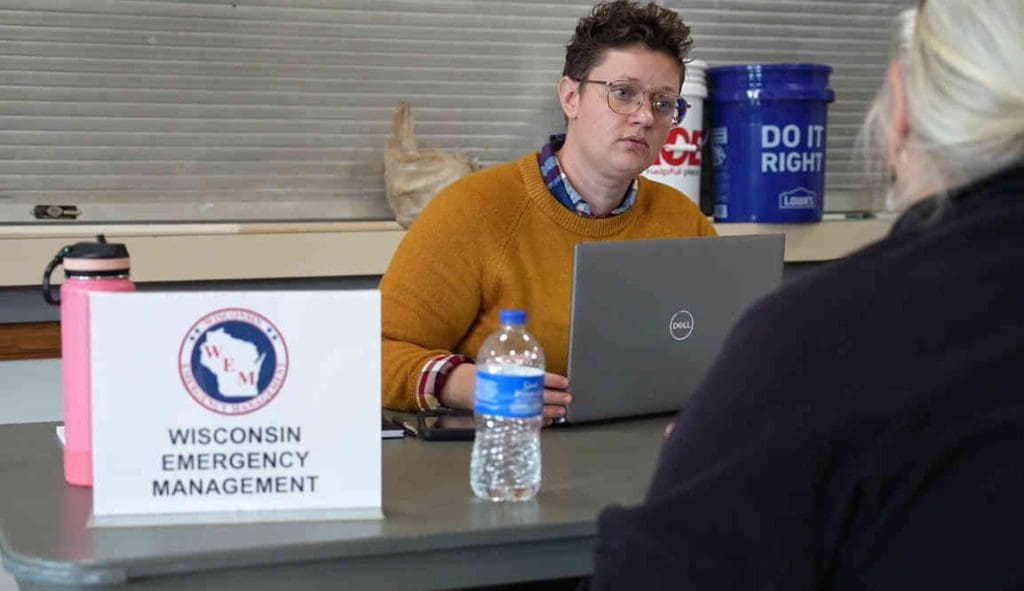
“Setting up and maintaining those centers as well as dealing with the small issues that may pop up involved teamwork and reacting quick on your feet,” said Liebl. “It’s good to see the work you put in and all the hours you work go to help people and knowing you helped get millions out the door and in the pockets of disaster survivors is fantastic.”
As of Dec. 19, more than $192 million was in the pockets of 36,502 flood survivors through the IA program. Although the application deadline ended on Nov. 12, applications and appeals are still being processed by the agency.
Public Assistance Appeal
While the IA program was underway, the state learned in late October its request for Public Assistance and Hazard Mitigation Grant Program for six counties, Door, Grant, Milwaukee, Ozaukee, Washington and Waukesha, was denied. Gov. Evers then directed WEM to submit additional justification to appeal FEMA’s decisions.
During the appeals process, in which the state had 30 days to appeal FEMA’s decisions, WEM’s Recovery Section gathered additional information from the counties and requested an additional Preliminary Damage Assessment for Public Assistance through FEMA. The additional review discovered more than $1 million in additional damages, bringing the total validated damage to more than $27.5 million, more than double the state’s official per capita threshold for FEMA Public Assistance.
“With this second round of preliminary damage assessments, the focus on documented damage in six counties that was not validated by FEMA previously,” said Stoikes. “This could not be done without the counties and locals to get that done that allotted timeframe. A state can appeal only once, and we did everything we could to highlight the need for federal assistance.”
The appeal letter was sent by Gov. Evers on Nov.19 to FEMA. As of Dec. 19, there is no word on FEMA’s decision.